
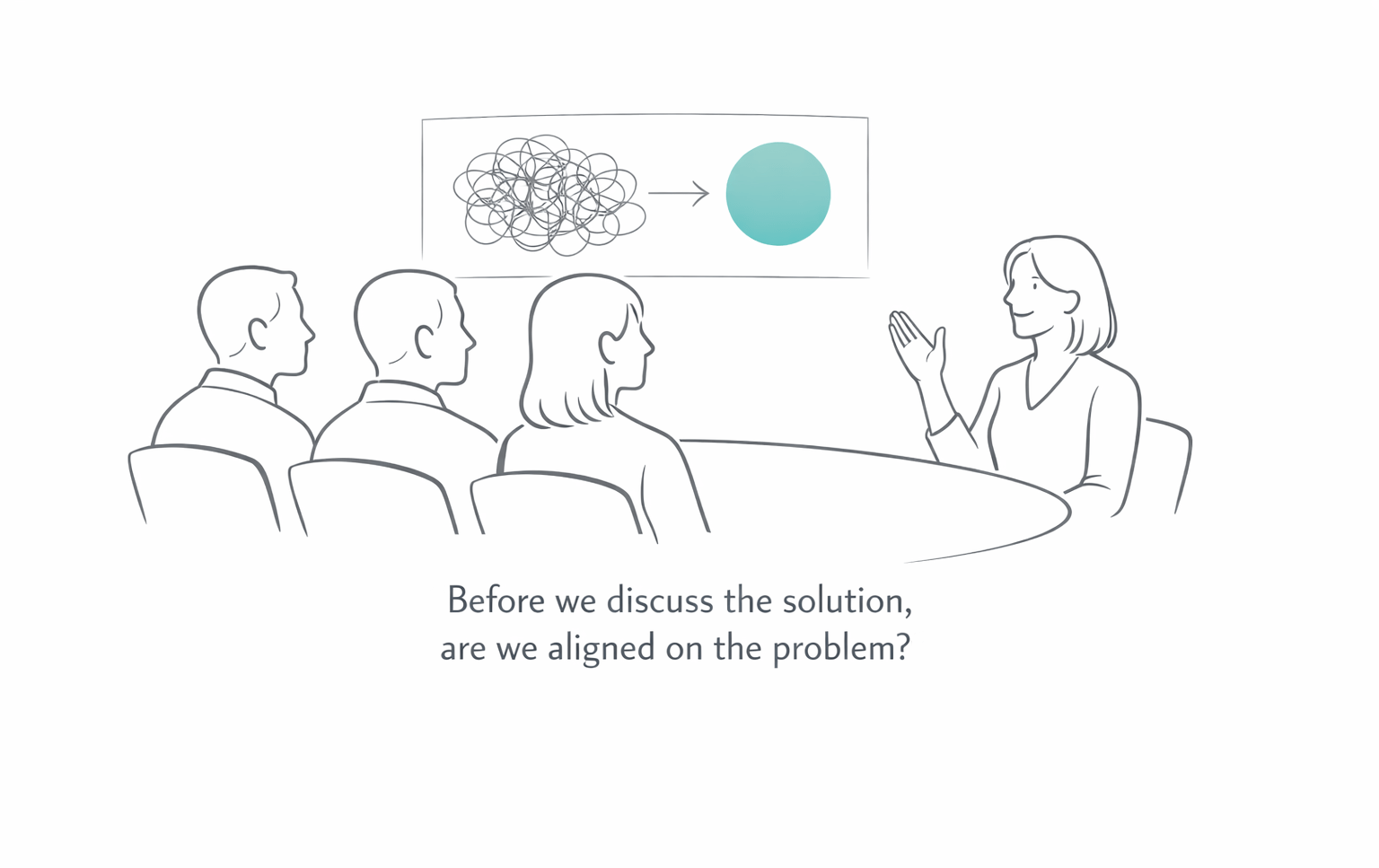
Early in my career, I mistook technical complexity for expertise.
When engineering discussions became difficult to follow, I worked harder to keep up instead of challenging the framing. And when explanations lacked clarity, I assumed the gap was mine rather than questioning the explanation itself.
Yet over time, I learned that complexity isn’t always a sign of sophistication. Often, it’s a sign of misalignment.
Too many conversations dive into the how before anyone aligns on the what and the why. I’d hear detailed explanations of a technical issue before anyone established where it appeared, who it affected, or why it mattered.
Other times, the topic wasn’t clear to anyone in the room – yet nobody felt comfortable pausing and asking the simple questions. Context was assumed, not shared.
Once I recognized that pattern, I became far more comfortable reframing discussions, asking questions, and challenging assumptions. And almost every time, conversations moved from noise to signal.
I see the same pattern in many of the leaders I coach today.
Some believe their impact comes from having all the answers. But one of the greatest contributions a leader can make is creating clarity – taking the pulse of the room, distilling the real challenge, and focusing attention where it matters.
Yes, AI can close knowledge gaps faster than ever. What it can’t do is create alignment or give leaders the confidence to slow the room down when clarity is missing. That still requires judgment. And sometimes, the most valuable thing a leader can do is ask:
“Before we discuss the solution, are we aligned on the problem?“

