
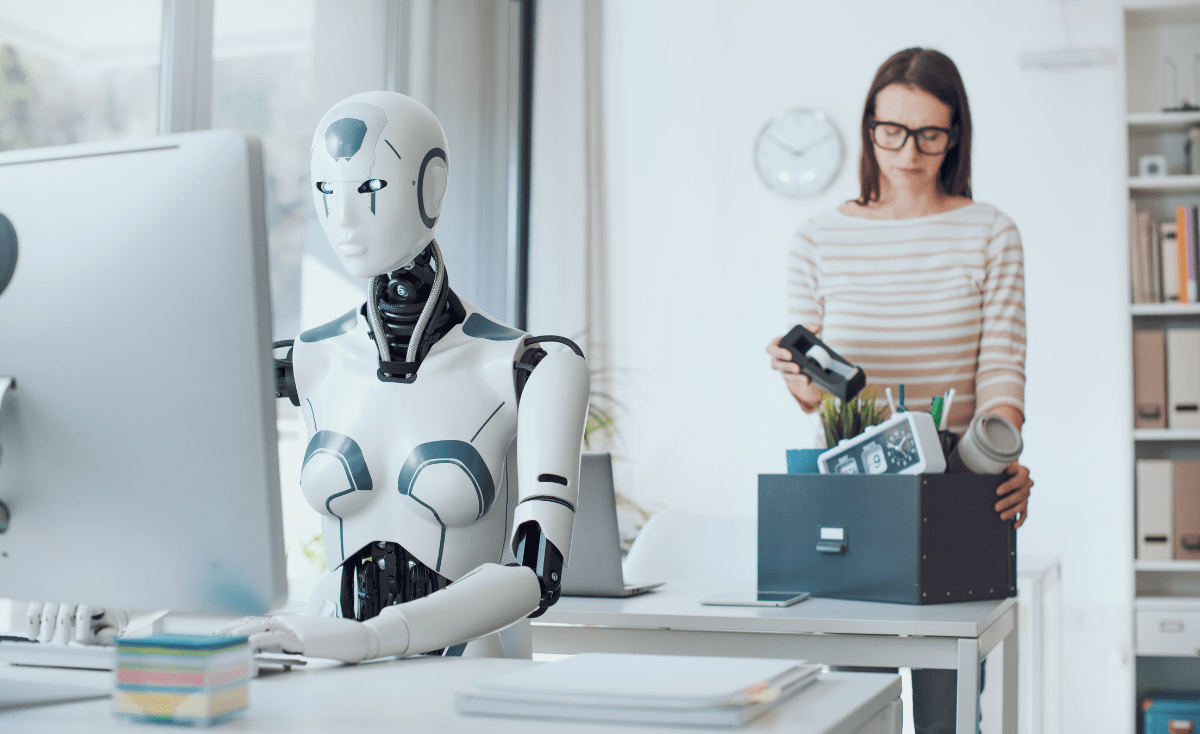
Nearly 40% of today’s skills will become outdated within five years. As AI transforms our jobs, 60% of employees will need reskilling – yet not all are likely to get it, according to the World Economic Forum. Meanwhile, 40% of employers plan to reduce staff by 2030.
Despite ambitious training programs, a massive ‘learning debt’ is building fast. Unless we fundamentally rethink career growth and prepare for what’s next, many will be left behind.
Yet the biggest challenge isn’t AI; it’s mindset.
Here are six critical mindset shifts to stay relevant in today’s AI-driven career landscape, which I recently shared at the Women in Tech Global Conference:
- The career ladder is out; the career wave is in. Growth is no longer linear or predictable, it’s fluid. Sometimes it means moving sideways or down before rising again. Instead of climbing at your own pace, you’re navigating shifting currents.
- Our sense of stability isn’t tied to job security anymore; it’s tied to adaptability. Staying mentally fit to ride the wave, no matter how unpredictable, is our greatest asset and that’s what sets us apart.
- Career growth is self-driven. It’s no longer something companies provide by default. It requires ownership and intentional effort. Instead of waiting for opportunities, you create them – because your development is your priority, not your employer’s.
- Normalizing the novice mindset is a strength, not a setback. Being ‘interns’ again at 30, 40, or 50+ is not failure, it’s courage. Progress means outgrowing our ego and embracing constant reinvention.
- AI fluency and systems thinking outweigh deep expertise in a single stack. Knowing how to leverage AI and connect the dots matters more than mastering one tool. Orchestrating the ‘what’ beats getting stuck in a narrow ‘how’.
- Leadership is now a survival skill, not just a title. It’s a must at every level, including individual contributors. If your role doesn’t require any leadership or strategic thinking, it’s likely routine and AI is coming for it.
The future favors those who can adapt quicker than change itself. Will it be easy? No. AI will especially disrupt professionals who rely on 9-to-5 routines, steady promotions and company-sponsored training as defaults for progression.
But the faster we let go of these old paradigms, the sooner we’ll be able to embrace a new way forward – one defined by agility, continuous learning, and self-leadership.
 Habit of Growth